Industry Background
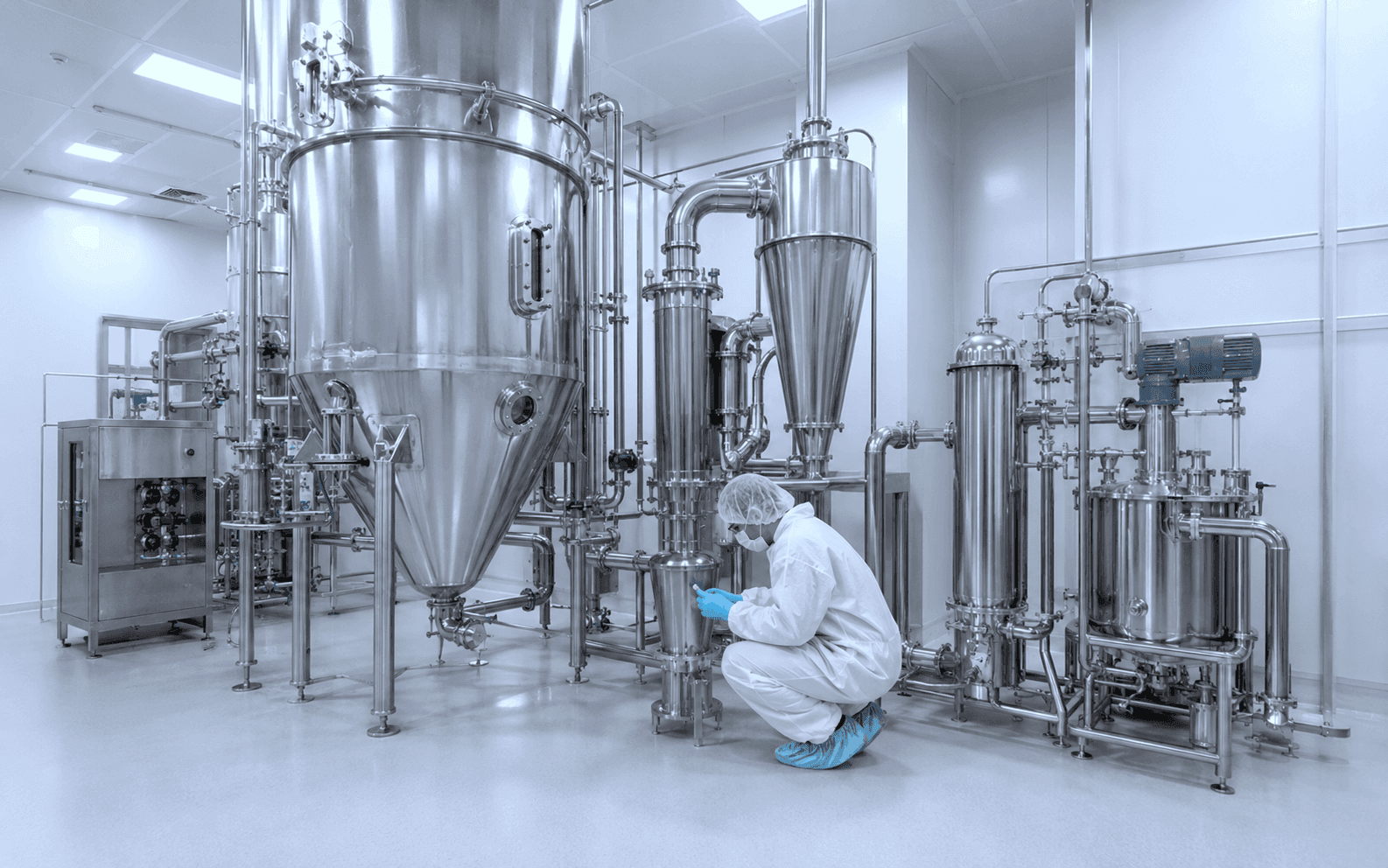
The pharmaceutical industry is seeing growing demand for spray drying as drug developers seek solutions to improve the bioavailability of poorly soluble compounds. With many new chemical entities exhibiting low aqueous solubility, spray drying has become a key enabling technology for producing amorphous solid dispersions (ASDs), engineering particle characteristics and accelerating formulation development. As a result, Contract Development and Manufacturing Organisations (CDMOs) are investing in spray drying capability to expand their service offering and support both clinical and commercial manufacturing programmes.
Process Expertise Identifies Critical Design Improvements
Our first task was to develop a complete process model by analysing production throughput, batch cycle times, equipment utilisation and work in progress requirements. This identified several process pinch points that would have restricted capacity and predicted that downstream drying would constrain production. Our specialist pharmaceutical process expertise enabled technical challenges to be identified and resolved before becoming operational issues, something that traditional PM organisations without dedicated pharmaceutical process knowledge would typically not identify during a conventional design exercise.
The result was a robust, compliant and efficient manufacturing facility that enabled the client to introduce a new high-value technology platform with confidence while reducing project risk, shortening implementation time and accelerating commercialisation.
Integrated Pharmaceutical Design Approach
Unlike traditional EPCM contractors, whose expertise typically centres on facilities project delivery rather than pharmaceutical process engineering, Epsilon acted as both the spray drying process SME and single point of responsibility from concept through to delivery.
The FEED study established:
- Process and personnel flows
- Materials and solvent handling philosophy
- Utility requirements
- Equipment integration
- Ancillary equipment requirements upstream and downstream
- Manufacturing suite layouts and ATEX requirements, plus basis of safety
- Future expansion capability
Solvent Processing & Process Development
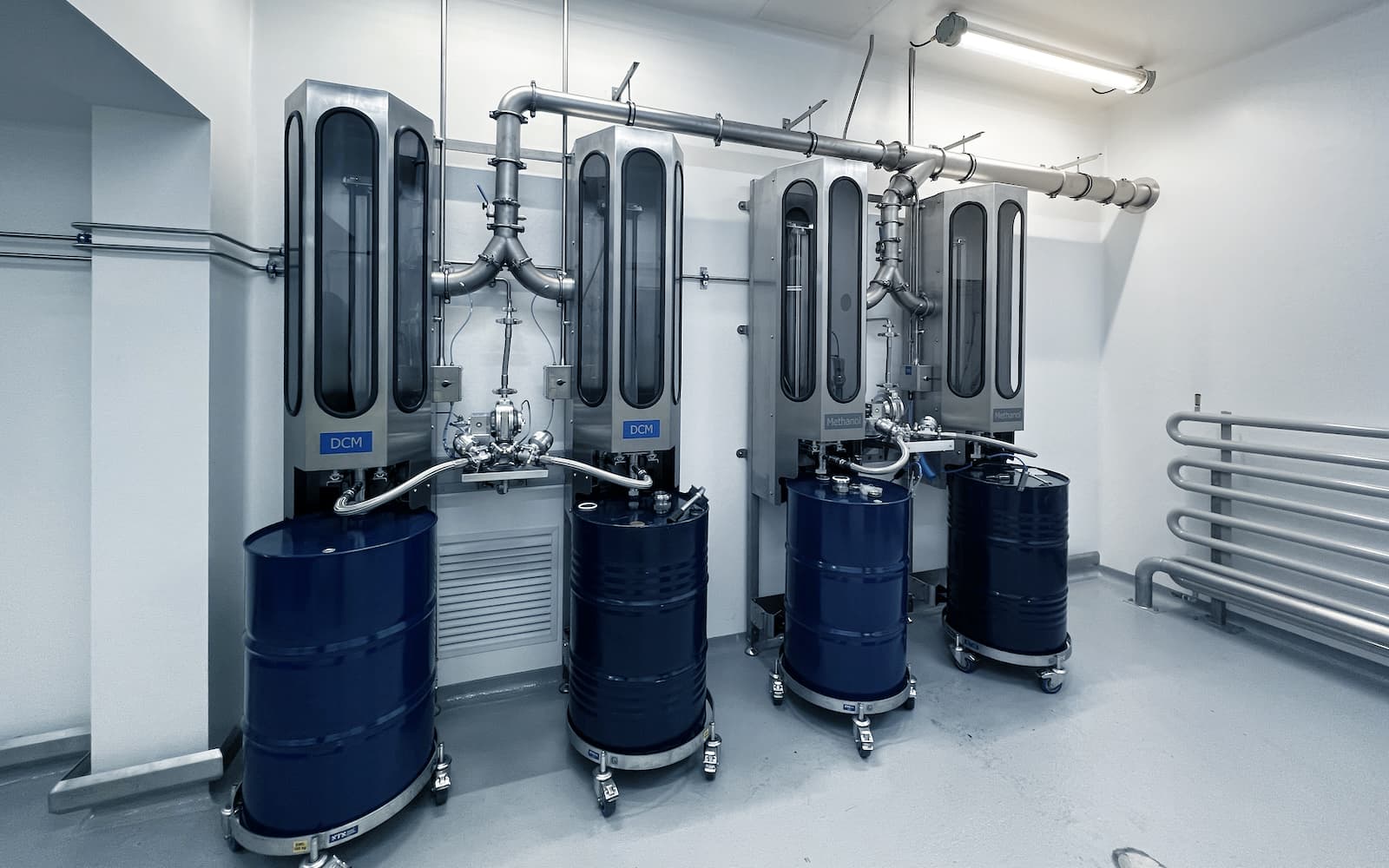
A major challenge was the introduction of flammable solvents onto a site that had not previously handled them at manufacturing scale, which required careful consideration of GMP, ATEX and process safety requirements. Epsilon completed the hazardous area assessment and VOC management strategy and designed a fully GMP-compliant solvent preparation and dispensing system before managing procurement, installation and commissioning.
Delivering a Complete Engineering Solution
Successful spray drying relies on far more than the spray dryer itself. Epsilon designed and integrated the critical systems required to deliver a safe, compliant and efficient manufacturing process, including:
- GMP-compliant solvent preparation and batching systems
- Solvent handling and dispensing
- Nitrogen inerting and process safety strategy/ATEX
- Automated batching and gravimetric weighing
- Earth monitoring and integrated safety interlocks
- Solvent recovery systems
- Utilities integration
- Downstream containment and powder handling
- Equipment procurement
- FAT, SAT and commissioning support
- Operator training and handover
Rather than coordinating multiple specialist suppliers, the client benefited from a single engineering partner responsible for both process expertise and project delivery, providing a streamlined route from concept through to operational readiness.
Project Outcome
By considering the complete manufacturing process rather than simply installing the spray dryer, Epsilon supported the introduction of pharmaceutical spray drying to the client’s facility, encompassing process, solvent handling, containment, utilities, ATEX compliance and waste recovery.
Our specialist process engineering expertise enabled critical design issues to be identified and resolved before construction, something a contractor without dedicated pharmaceutical process knowledge would typically not identify. The result was a robust, compliant manufacturing facility delivered with lower project risk, improved product recovery and greater long-term operational efficiency.
“Epsilon’s specialist pharmaceutical process engineering expertise ensured that critical design decisions were identified early, before they impacted cost, capacity and, ultimately, commercial success.”
Client’s Programme Manager